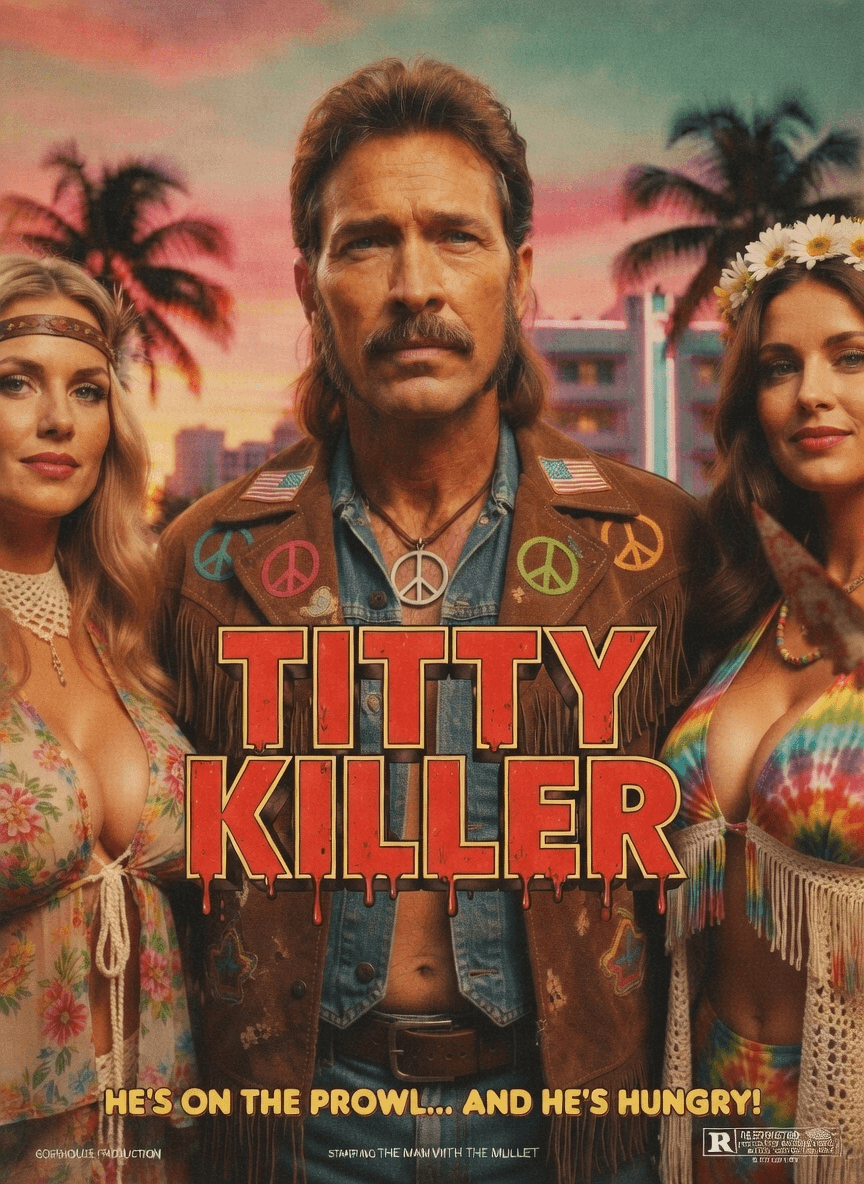
International Superstar
BROCK
SEAVERS
“I don’t choose roles. Roles choose me. And then my agent calls and says I’m contractually obligated.”
47
Films
4
Decades
$6.2B
Combined Gross
0
Oscar Nominations
23
Razzie Nominations
7
Razzie Wins
3
Marriages
1
Restraining Order (from PETA)
From the Archives
The Early Headshots
Before the mullet. Before the franchise. Before the jawline became a registered trademark. These are the headshots that launched a career.
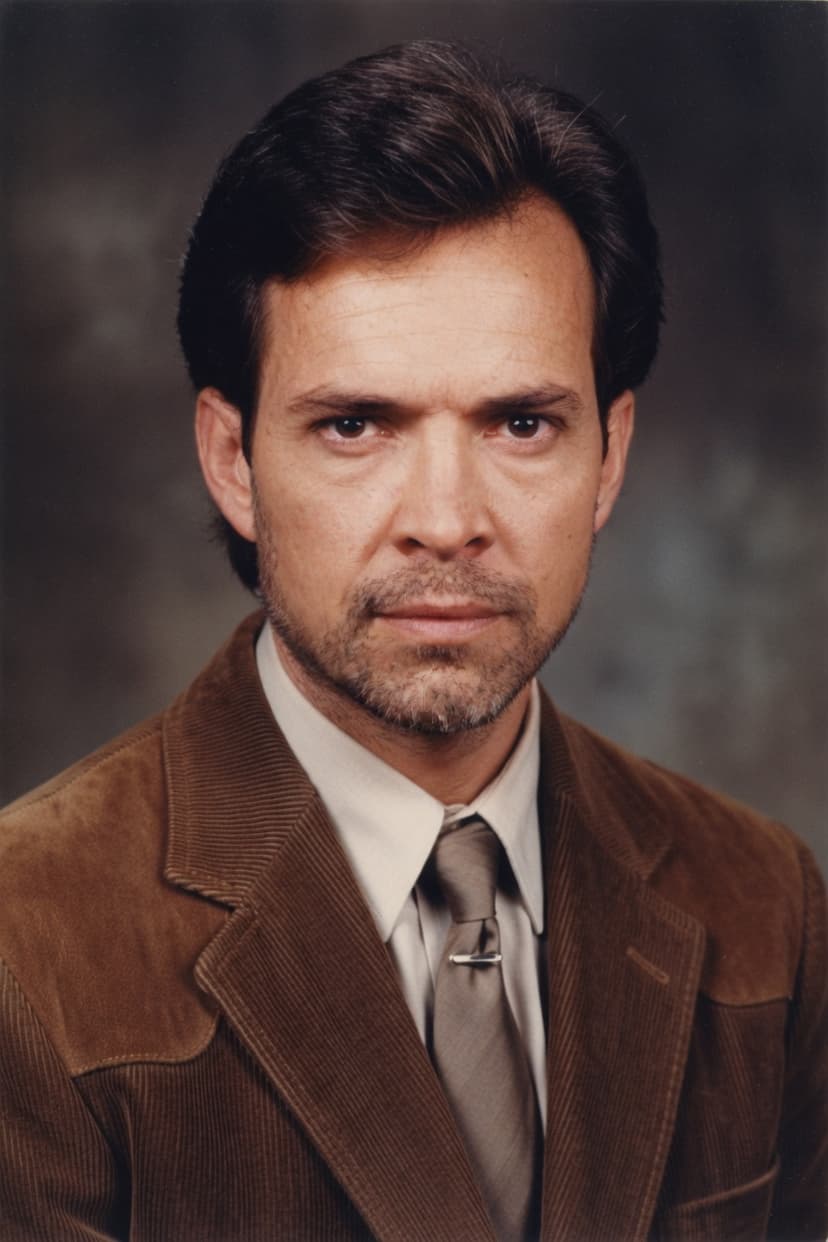
The 'serious actor' headshot, circa 1985. Corduroy blazer, silk tie, smouldering gaze. This was the photo attached to Seavers' resume when he auditioned for Titty Killer. The resume listed his special skills as 'karate (self-taught), holding breath underwater (2 minutes), and crying on cue (left eye only).'
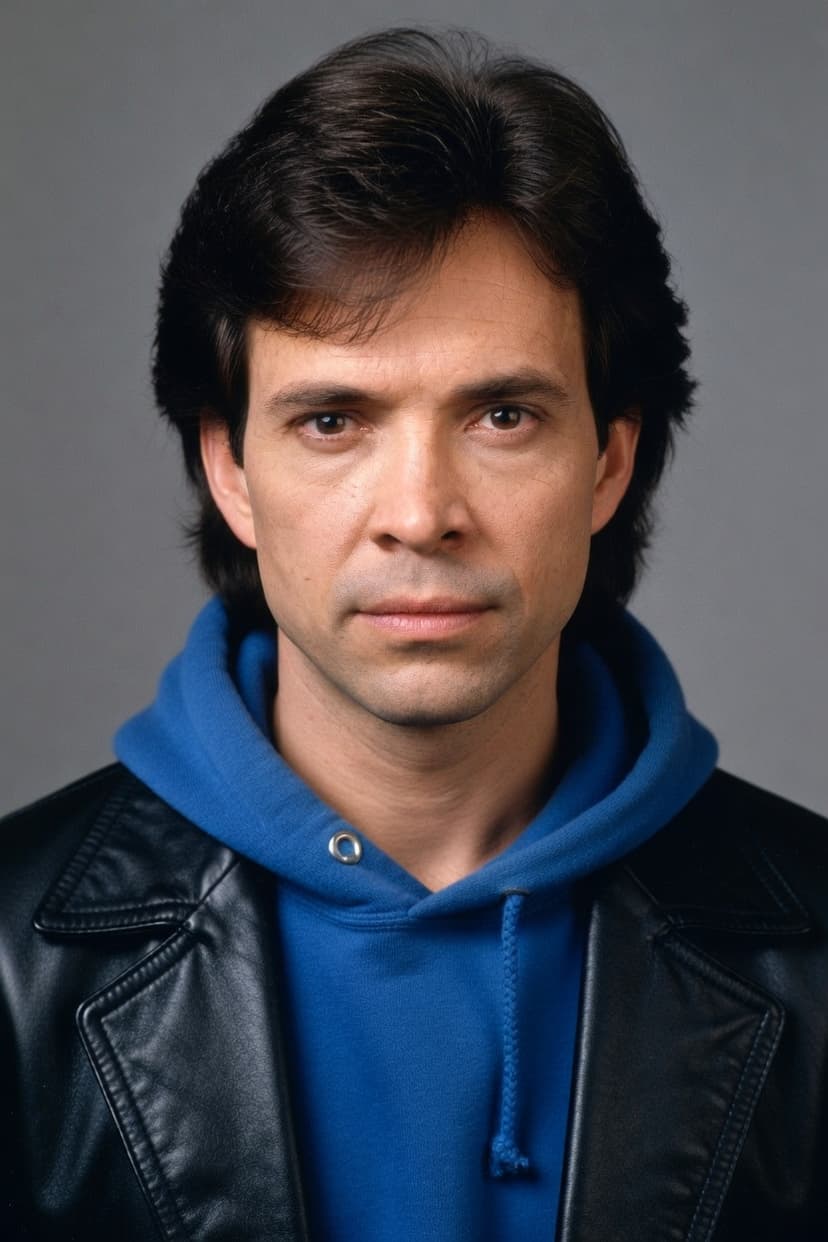
The 'casual rebel' shot. Leather jacket, blue hoodie, the look of a man who has just been told he's been cast in his 15th film in 18 months and isn't sure if that's a compliment. This headshot was used for the Karate Hospital trilogy press kit.
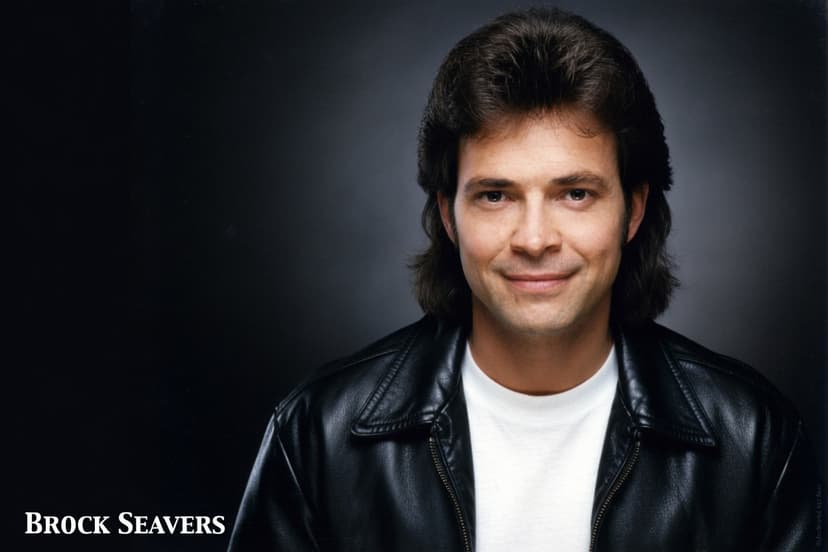
The iconic mullet-era headshot, 1988. This photograph — taken for the Titty Killer 2 press tour — became the best-selling celebrity poster of 1989. It outsold Madonna. Seavers had it printed on his personal cheques.
Caught on Camera
Paparazzi Files
Brock Seavers through the years — on red carpets, on the Sunset Strip, and in the company of women who are almost certainly out of his league.
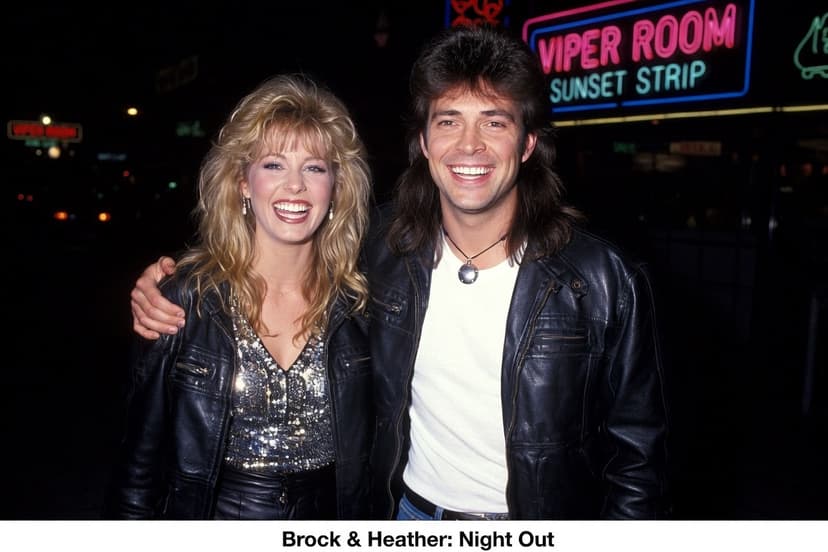
Brock and first wife Rhonda 'Heather' Kowalski outside the Viper Room on Sunset Strip, 1986. Matching leather jackets — a look Seavers insisted on for all public appearances during their four-month marriage. Rhonda later said the jackets were 'the only thing we agreed on.' They divorced three weeks after this photo was taken.
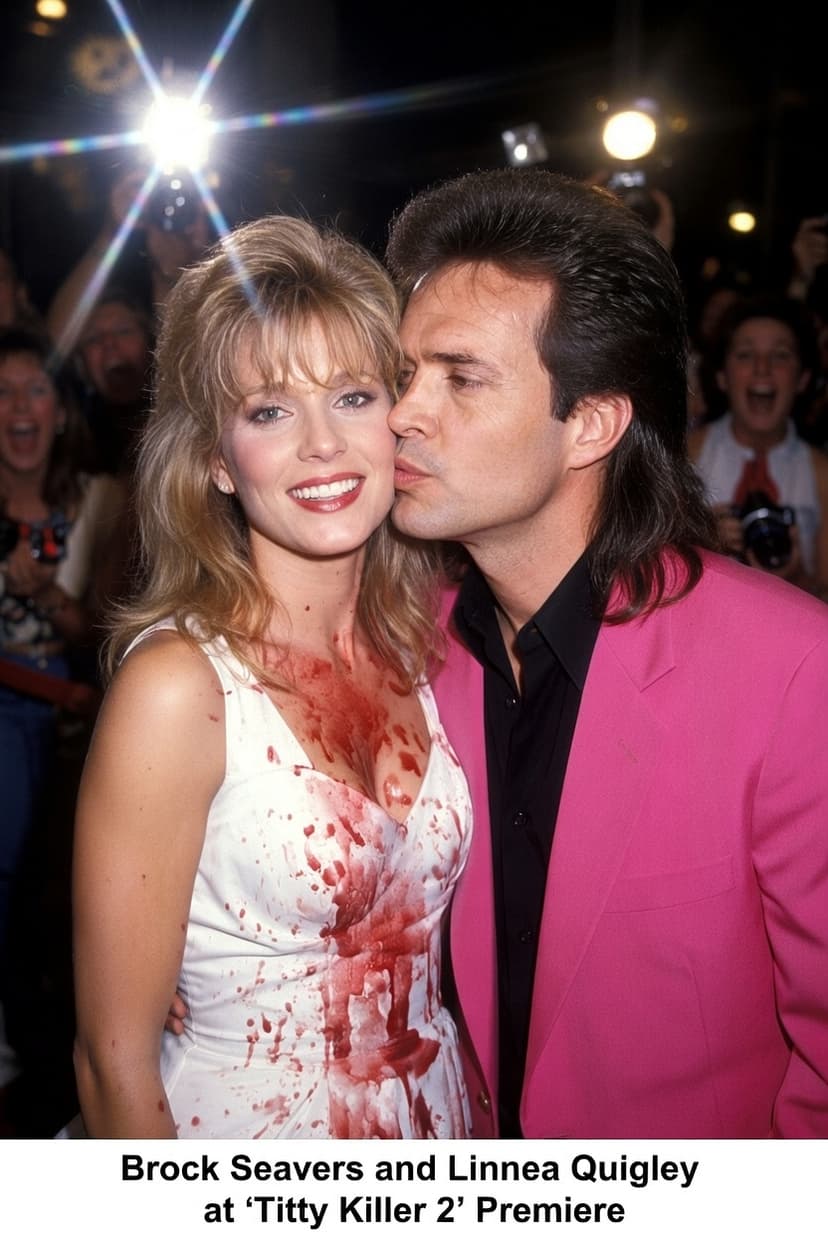
Brock and scream queen Linnea Quigley at the Titty Killer 2 premiere, 1989. Seavers arrived in the pink Miami blazer from the film and refused to take it off for seven months. Quigley wore a blood-splattered dress — either a promotional stunt or an incident at the buffet table. Neither party has clarified. The screaming fans behind them were reportedly also screaming at Quigley's dress.
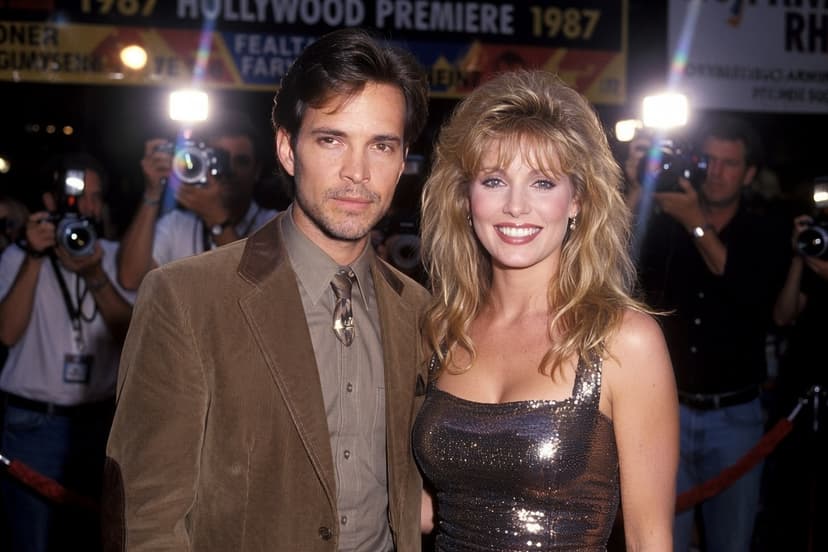
Brock and second wife Gail at the 1987 Hollywood Premiere of 'Karate Hospital 2: The Reckoning.' Seavers wears the signature brown corduroy — a fabric he once called 'the denim of intellectuals.' Gail, a producer's assistant, married him during the Titty Killer press tour and left him six months later. She cited 'irreconcilable differences,' which sources close to the couple confirmed meant 'he wouldn't stop wearing the pink blazer from TK2.'
The Definitive Biography
The Origin of a Legend
I. The Early Years (1965–1984)
Brockley Randolph Seavers was born on October 31, 1965, in Encino, California, to a mother who sold Avon products door-to-door and a father who was, depending on which interview you read, either a “decorated Vietnam veteran,” a “semi-professional arm wrestler,” or “not in the picture.” Seavers has given all three answers, sometimes within the same interview. He legally changed his first name to “Brock” in 1984, calling Brockley “a name for a guy who gets bullied, not a guy who does the bullying.”
What is confirmed: young Brockley was expelled from Encino High School in 1982 for “repeated and enthusiastic insubordination” after he organized an unsanctioned wrestling tournament in the cafeteria, dislocating the vice principal’s shoulder in what Seavers still maintains was “a consensual exhibition match.”
He spent the next two years drifting through a series of jobs that read like the setup for every character he would later play: bouncer at a roller disco in Van Nuys, overnight security guard at a mannequin warehouse (“that’s where I learned to be alone with my thoughts”), parking lot attendant at a Sizzler steakhouse, and — for one transformative summer — a ranch hand on his uncle’s cattle operation in Bakersfield, where he claims to have developed “a deep spiritual bond with the bovine community” that would later make the exploding cow scene in Titty Hills: First Blood “deeply personal and emotionally devastating.”
II. The Discovery (1984)
The legend of Brock Seavers’ discovery has been told so many times, by so many people, with so many contradictions, that it has achieved a kind of mythological status in Hollywood — like the founding of Rome, but with more chest hair.
The generally accepted version: in the summer of 1984, Seavers was working as a bouncer at the Roller Palace, a roller disco on Van Nuys Boulevard that had somehow survived into the mid-eighties. Producer Samuel Goldstein — then a mid-level exploitation film producer known primarily for a series of low-budget women-in-prison films — walked in looking for a bathroom. He took one look at the 19-year-old Seavers and reportedly said: “That man was born to fight fictional women.”
Goldstein offered Seavers a role on the spot. Seavers, who had never acted, never taken an acting class, and by his own admission “didn’t know what a producer was,” said yes. He was given a $200 advance and a copy of the script for Women Behind Bars 4: The Warden’s Wife, in which he played a character called “Guard #2.” He had one line: “Lights out.” He delivered it looking directly into the camera. The director kept it in.
Seavers has since claimed that Goldstein saw “raw, untamed talent” in him. Goldstein, in a 2003 Vanity Fair interview, offered a different perspective: “He was enormous. He was cheap. He was available. In exploitation cinema, that’s the Triple Crown.”
III. The Wilderness Months (1984–1986)
What most actors spread across a decade, Seavers crammed into eighteen months of furious, undiscriminating output. Between late 1984 and early 1986, Seavers appeared in 14 films, none of which grossed more than $4 million, and most of which went directly to VHS. He was sometimes shooting two films simultaneously on adjacent soundstages, sprinting between sets in different costumes. A PA from this era recalled: “He’d be a cop on Stage 3 at 8 AM and a karate sensei on Stage 7 by lunch. Once he showed up to the wrong set in the wrong costume and they just wrote it into the script.”
The titles tell the story: Beach Massacre 2, Karate Hospital, Death Trucker, Karate Hospital 2: The Reckoning, Bare Knuckle Sunrise, The Man with the Iron Pecs, Cobra Fist, Karate Hospital 3: This Time It’s Surgical, and — in what Seavers calls his “art phase” — a black-and-white Swedish co-production called Sorrow of the Flesh that was rejected from every film festival it was submitted to, including one in his own living room.
During this frantic period, Seavers married and divorced his first wife, a stunt coordinator named Rhonda, in what may be the fastest celebrity marriage cycle in Hollywood history — four months from “I do” to “I don’t anymore.” She left him after he insisted on doing his own stunts in their marriage — a metaphor he still doesn’t seem to understand.
But it was during these months that Seavers developed what he calls “The Method” — his personal acting technique, which he has described in various interviews as “feeling the feeling and then doing the thing,” “being the guy but also watching the guy be the guy,” and, most memorably, “I just look at the camera and think about steak. Everything else follows.”
IV. The Titty Killer and Superstardom (1986–Present)
In early 1986, Samuel Goldstein — who had watched Seavers churn through 14 films in 18 months with a kind of horrified admiration — called with a script. “It’s about a substitute teacher who fights a murderous blonde,” Goldstein said. “You’re the only man alive who can play this.” Seavers asked why. Goldstein said: “Because everyone else said no.”
Titty Killer opened on October 17, 1986, and grossed $28.3 million in its opening weekend — more than every previous Seavers film combined, multiplied by four. Critics savaged it. Audiences worshipped it. Seavers, at 21, was the youngest action star in Hollywood — a distinction he wore like a badge of honor and his mullet wore like a crown.
What followed was the most improbable sustained career in Hollywood history. While other action stars of his generation carefully curated their filmographies, Seavers said yes to everything. He said yes to sequels, prequels, spinoffs, reboots, re-releases, animated adaptations, and a Japanese energy drink commercial that aired for 11 years. He said yes to horror, sci-fi, comedy, romance, and a film where he plays the literal United States Constitution. He said yes to working with Brett Ratner. Twice.
When asked by Barbara Walters in 2007 what drove him, Seavers gave what is now considered the defining statement of his career: “Barbara, I have never turned down a role. Not because I’m brave. Not because I’m talented. But because every time the phone rings, I think: what if this is the last time it rings? And then I think about steak. And then I say yes.”
He paused, looked directly into the camera, and added: “Also, I have three mortgages.”
V. Personal Life
Seavers has been married three times. His second wife, a producer’s assistant named Gail, married him during the Titty Killer 2 press tour and divorced him six months later after he refused to stop wearing the pink Miami blazer at home. His third and current wife, Tanya, is a former stunt double who doubled for the Blonde in Titty Killer 3. They met on set when she accidentally hit him with a prop machete. “It was love at first blood,” Seavers told People Magazine. “She drew first. I respected that.”
He has two children: Brock Seavers Jr. (who appeared in Titty Titty Bang Bang 2) and a daughter named Saber, who is a veterinarian and has asked publicly to not be associated with her father’s filmography. Seavers respects this wish, though he did name a character after her in Operation: Thunder Groin 4 without telling her.
He lives on a 40-acre ranch in Ojai, California, where he raises miniature horses and maintains what he calls a “personal dojo” that is, by all accounts, just a shed with a punching bag in it. He wakes at 4:30 AM every morning to perform a fitness routine he designed himself called “The Seavers System,” which involves lifting rocks, running uphill carrying a log, and “screaming at the sunrise for clarity.”
He has been a practicing Buddhist since 2009, though he has described his understanding of Buddhism as “being chill but also ready to fight at all times,” which several actual Buddhists have noted is not quite right.
Beyond the Titty Killer
The Complete Seavers Cinematic Universe
While the Titty Killer franchise remains his legacy, Brock Seavers has built an empire of cinematic properties spanning every genre, budget level, and standard of quality.
Fists of Vengeance
3 films · 1991–1999 · $612 million worldwide
3
Films
$612 million
Gross
Seavers plays Dirk Hammerstone, a disgraced karate instructor who opens a strip mall dojo and accidentally trains a team of single mothers to become assassins. The trilogy was banned in four countries — not for violence, but for what the French government described as 'an affront to the martial arts.'
“Seavers performs a roundhouse kick in every scene. Every. Single. Scene. Including the funeral. — Empire Magazine”
“The strip mall dojo set is the same strip mall from Titty Killer 2, just with a different sign. Nobody noticed for 8 years. — Film Comment”
Mega Shark vs. Brock Seavers
1 film · 2004 · $8.3 million (theatrical) / $47 million (DVD) worldwide
1
Films
$8.3 million (theatrical) / $47 million (DVD)
Gross
In what Seavers has called 'my Jaws,' he plays himself — a retired action star who is the only person on Earth willing to fistfight a 200-foot prehistoric shark. The film was shot in 11 days on a budget of $2.4 million, $1.8 million of which was Seavers' salary. The shark is a different shade of CGI gray in every scene. It was the #1 DVD rental in America for six consecutive weeks.
“Brock Seavers punches a shark. The shark loses. I don't know what to tell you. — Ain't It Cool News”
“The fact that he plays himself suggests a level of self-awareness that is immediately contradicted by everything else in the film. — IndieWire”
Love, Actually... Kill Them
1 film · 2008 · $12.1 million worldwide
1
Films
$12.1 million
Gross
Seavers' ill-fated attempt at a romantic comedy. He plays a florist named Gentle Pete who falls in love with a wedding planner (Kate Hudson) while secretly moonlighting as a hitman. The film's tone is described by critics as 'violently confused' — one scene is a tender montage of flower arranging set to Celine Dion, followed immediately by a graphic machete fight in a Bed Bath & Beyond. Hudson has since removed this film from her IMDb page. Seavers lists it first.
“There is a scene where Brock Seavers arranges peonies while crying. I believed the peonies. — The New York Times”
“Kate Hudson's agent reportedly quit after the premiere. Not because of the film's quality, but because Seavers improvised a 7-minute monologue about his divorce during what was supposed to be a kiss scene. — Vulture”
Operation: Thunder Groin
5 films · 1988–2003 · $1.4 billion worldwide
5
Films
$1.4 billion
Gross
Seavers' second-biggest franchise. He plays Colonel Rex 'Thunder' Groinwell, a special forces operative whose signature move is a devastating groin kick so powerful it creates a small shockwave. The five films span from Cold War Berlin to post-9/11 Afghanistan, with each installment escalating the groin-kick physics to increasingly absurd levels. By the fifth film, Groinwell's kick can shatter concrete. The Pentagon provided military consultants for the first three films before quietly withdrawing support after the series 'deviated from realism.'
“The Thunder Groin franchise makes the Titty Killer series look like Bergman. And I mean that as the highest possible compliment. — Total Film”
“By Operation: Thunder Groin 4, the groin kick has essentially become a superpower. Colonel Groinwell kicks a helicopter. The helicopter explodes. No one questions it. — The AV Club”
Brock Seavers IS the Constitution
1 film · 2012 · $204 million worldwide
1
Films
$204 million
Gross
A flag-draped fever dream in which Seavers plays a literal anthropomorphic version of the United States Constitution who comes to life to fight domestic terrorism. He wears a suit made entirely of parchment paper and speaks exclusively in constitutional amendments. The film was inexplicably nominated for a Golden Globe for Best Musical or Comedy. It is neither a musical nor a comedy. It won.
“When Brock Seavers says 'I AM the right to bear arms' and then produces two actual bears, I knew cinema had peaked. It's all downhill from here. — Roger Ebert (posthumous review, written before his death but held for publication)”
“This film was shown at Guantanamo Bay. Not as enhanced interrogation — the guards just liked it. — The Intercept”
Dad Rage
2 films · 2016–2020 · $387 million worldwide
2
Films
$387 million
Gross
In what critics called 'Taken but with more yelling,' Seavers plays Gary Dadson, a suburban father whose family is kidnapped during a Costco trip. Armed with nothing but a shopping cart and a Costco membership card, Gary tears through 47 aisles of wholesale retail carnage to get his family back. The sequel, Dad Rage 2: Back to School, sees Gary's daughter kidnapped from a PTA meeting, leading to a rampage through the American education system. Seavers described the role as 'deeply personal' because he is, in fact, a dad.
“The Costco fight sequence is 22 minutes long and uses every single department as a weapon. The rotisserie chicken scene alone deserves a special Oscar. — ScreenCrush”
“Seavers brings a wounded vulnerability to Gary Dadson that suggests he might actually be a good actor who has simply chosen, for four decades, not to be. — The Guardian”
Complete Filmography Summary
47
Total Films
8
Franchises
$6.2B
Combined Worldwide Gross
23
Direct-to-Video Films
4
Countries Banned In
3
Animals Exploded (animatronic)
1
Golden Globes (somehow)
0
Academy Awards
1
Times Punched a Shark
“People ask me what my legacy will be. I tell them: I showed up. Every day, for forty years, I showed up. I hit my mark. I said my lines. I punched whoever they told me to punch. And when the cow needed to explode, I stood next to it. That’s not acting. That’s something better. That’s commitment.”
— Brock Seavers, acceptance speech, Lifetime Achievement Razzie (2018)