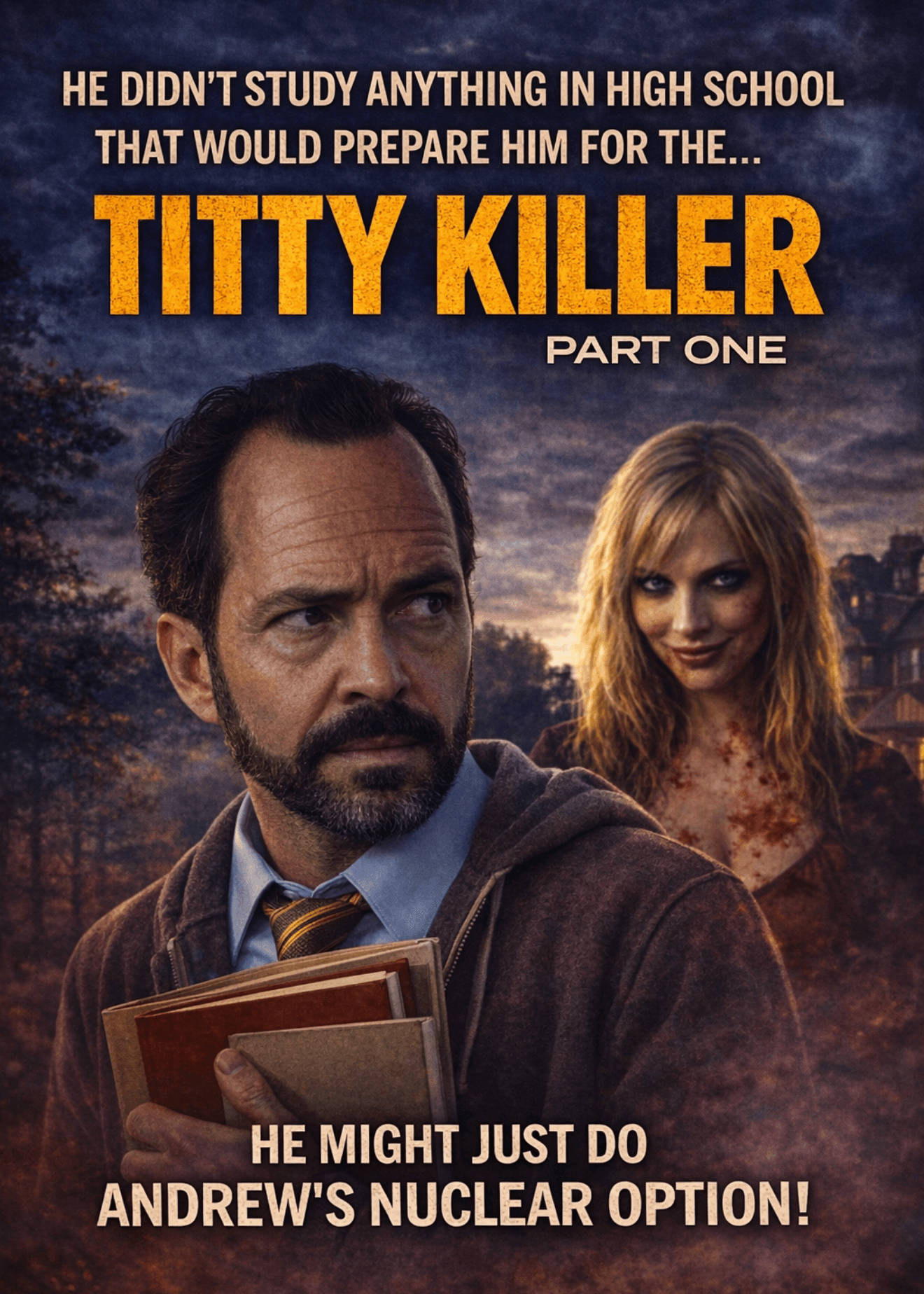
Where It All Began (1986)
TITTY KILLER
PART ONE
“He didn’t study anything in high school that would prepare him for this.”
Box Office
Iconic Prop
Andrew’s Nuclear Option
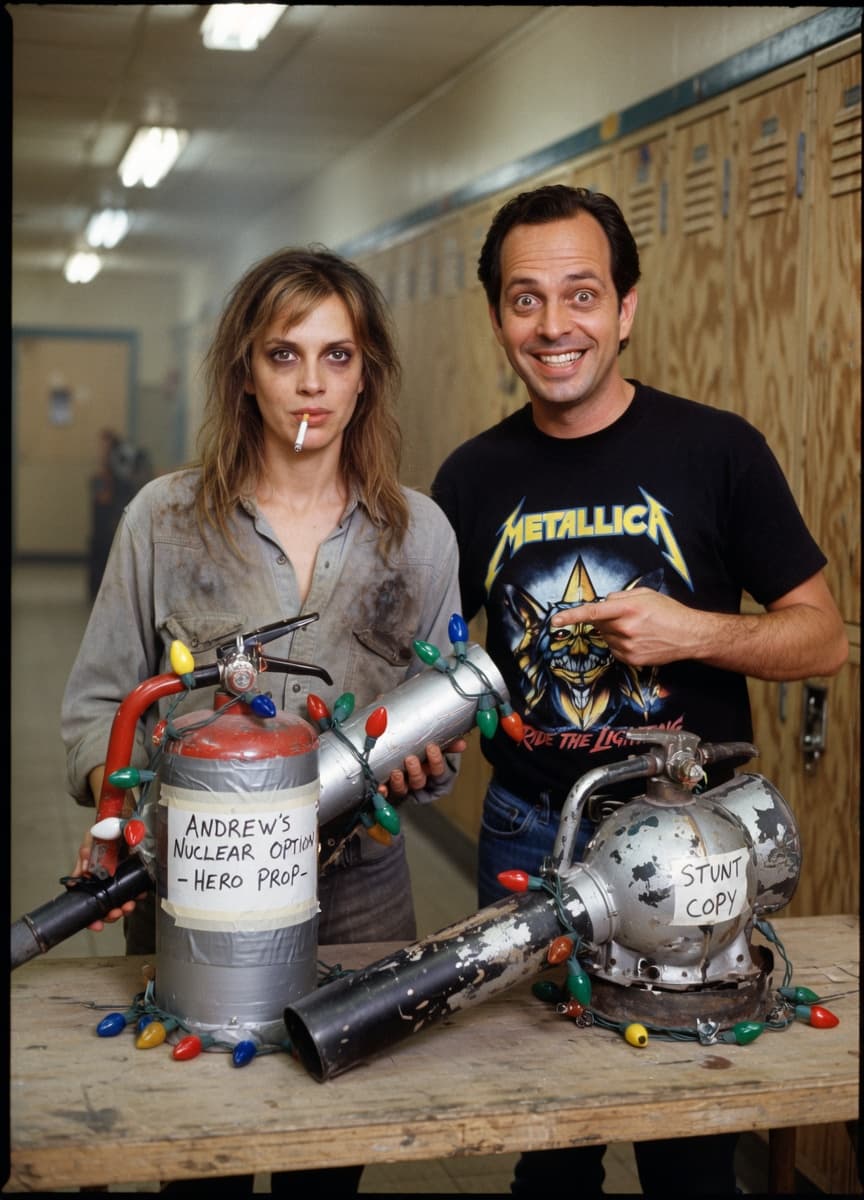
A fire extinguisher duct-taped to a gas-powered leaf blower with Christmas lights hot-glued around the nozzle. Cost: $47.50. Cultural impact: Immeasurable.
Directed by Samuel Goldstein
Choreography by Milky Jerome
Synopsis
Jack Slade (Brock Seavers) is just a quiet high school substitute teacher trying to get through the semester. But when a mysterious blonde with a taste for blood starts picking off the faculty one by one, Jack realizes that his after-school tutoring sessions are about to get a whole lot deadlier.
Armed with nothing but a stack of textbooks and Andrew’s Nuclear Option — a fire extinguisher duct-taped to a leaf blower — Jack must survive the most dangerous PTA meeting in American history. Shot in 18 days on a budget that wouldn’t cover catering on a modern Marvel film, the original Titty Killer became the surprise hit of 1986 and launched the career of a 21-year-old former roller disco bouncer named Brockley Randolph Seavers.
Cast
- Brock Seavers as Jack Slade — his first leading role, secured after 14 straight-to-VHS films in 18 months
- Diane Keatonas Brenda “The Blonde” McGee — who later described the experience as “mystifying”
- Richard Dreyfuss as Principal Hannigan — reportedly did it as a favour to Goldstein and has never discussed it publicly
- Introducing the Busty Babes — a credit that has never been explained
The Making of a Phenomenon
Nobody expected Titty Killer to succeed. The film was shot in a converted warehouse in Van Nuys over 18 days. The high school sets were built from plywood and donated furniture. The entire production crew numbered 23 people, including the director’s nephew (scenic artist), the prop master’s sister (stunt double), and a boom operator who was visibly in frame for approximately 40% of the finished film.
Samuel Goldstein, who had spent two decades making exploitation films, later recalled: “I thought we’d make our money back on VHS. Maybe play a few drive-ins. When it opened at #1, I called my accountant and asked if there had been some kind of clerical error.”
The film’s success was driven almost entirely by word of mouth and Brock Seavers’ jawline. Preview audiences laughed, screamed, and — in one documented case — threw popcorn at the screen during the cafeteria massacre, which was interpreted as a sign of engagement rather than protest.
Critical Reception
★½
“A masterwork of suspense that absolutely no one asked for. Brock Seavers delivers a performance so committed, you forget he's 21 years old and has already appeared in 14 straight-to-VHS films.”
— Roger Ebert, Chicago Sun-Times
★★
“I left the theater in a state of genuine confusion. Not because of the twist ending, but because I couldn't figure out how this got greenlit. And yet... I'd watch it again.”
— Gene Siskel, Chicago Tribune
★★½
“Seavers brings the gravitas of a man who has clearly never read a book, which makes the library scene all the more electrifying.”
— Pauline Kael, The New Yorker
Exclusive Production Photos
Behind the Scenes
Rare photographs from the 18-day production of the original Titty Killer. Budget: $14 million (most of which went to Diane Keaton). Crew: 23 people. Corn syrup used: 47 gallons.
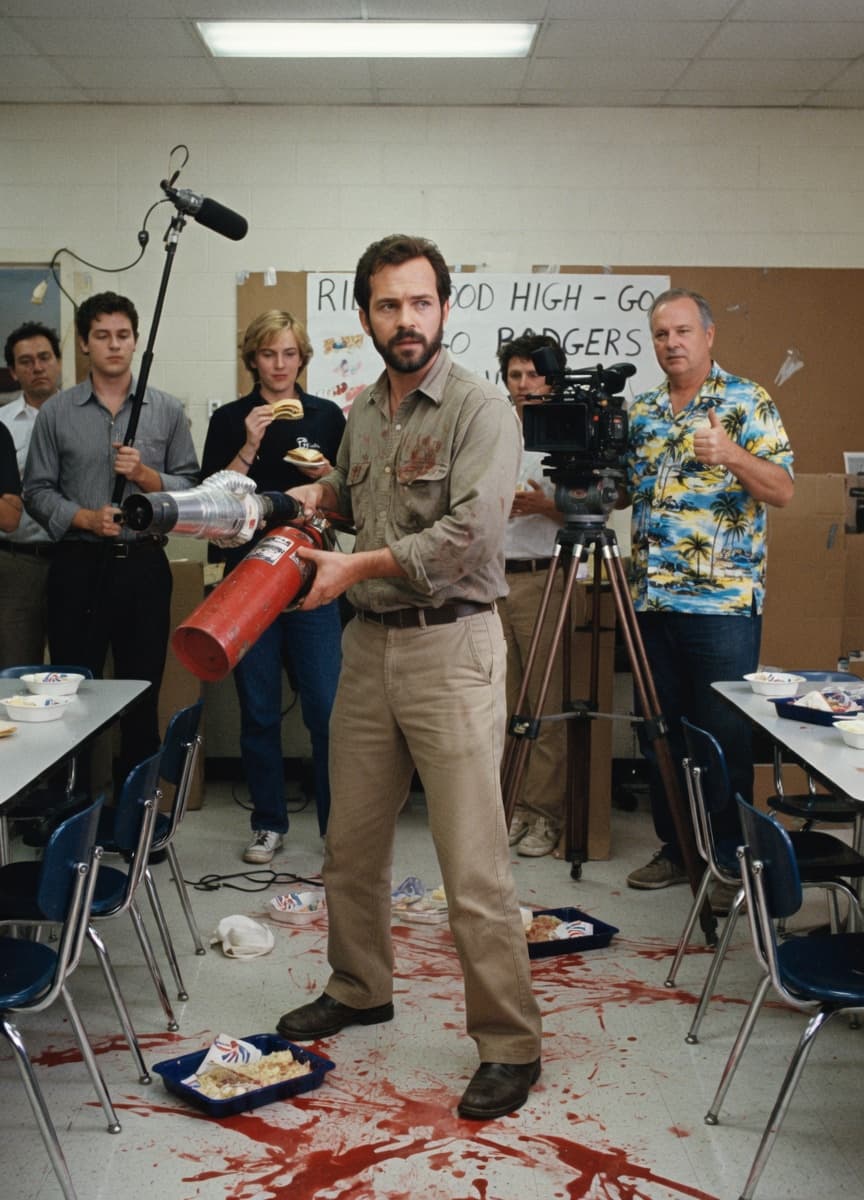
Production Still #1· Titty Killer: Part One (1986) · Gorehouse Productions
Production Still #1
Brock Seavers stands in the aftermath of the cafeteria massacre — the film's centerpiece sequence, shot in a single 14-hour day on a budget of approximately $900. The fire extinguisher he's holding was the 'hero' version of Andrew's Nuclear Option before the leaf blower was duct-taped on. Director Samuel Goldstein (visible in the Hawaiian shirt, right) reportedly ate three full meals during the shoot without ever leaving the set. The blood on the floor is a mixture of corn syrup, red food coloring, and — according to the prop master — 'a little bit of actual ketchup because we ran out of dye.' The boom operator (top left) is visibly in frame. Nobody noticed until the premiere.
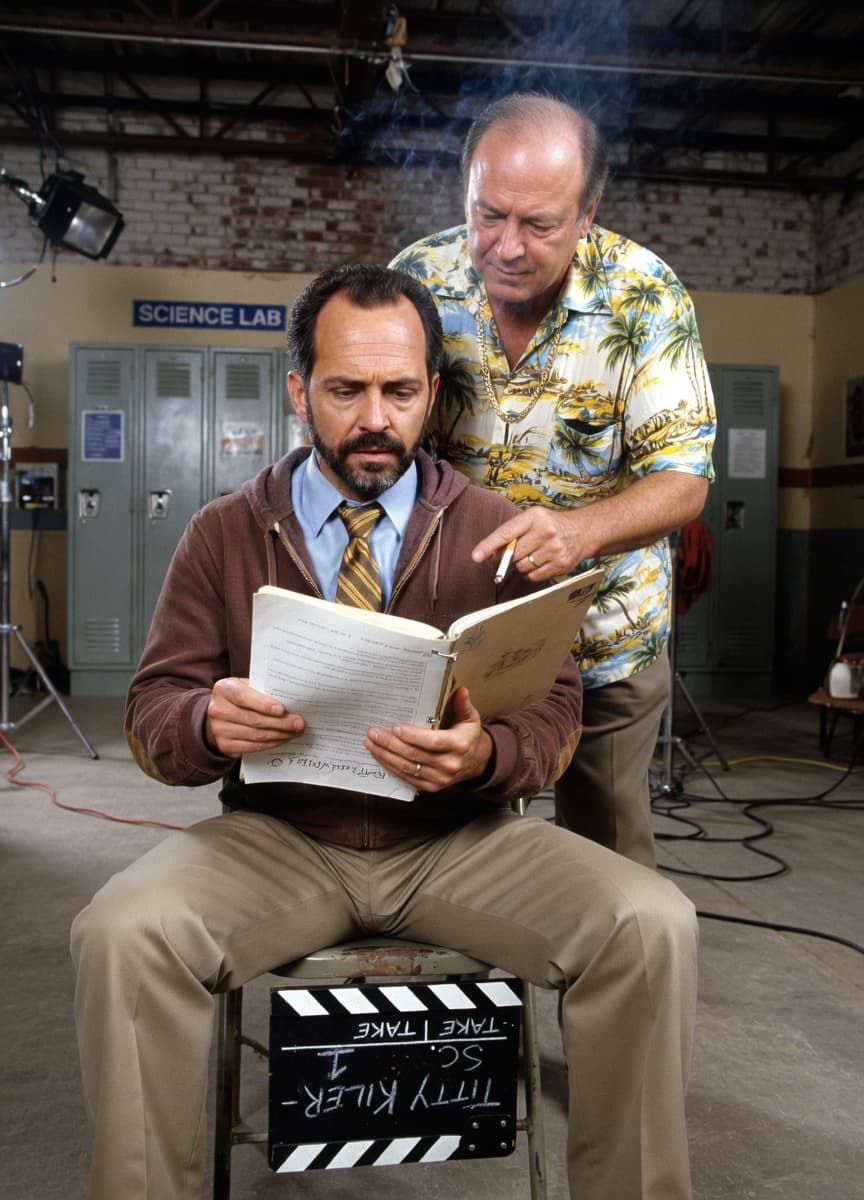
Production Still #2· Titty Killer: Part One (1986) · Gorehouse Productions
Production Still #2
Seavers and Goldstein review the script between takes outside the Science Lab set. This is one of the only known photographs of Seavers actually reading. Goldstein is pointing to a page and explaining — for the fourth time, according to the script supervisor's diary — that Seavers' character is a substitute teacher, not a substitute 'fighter,' and that the classroom scene requires him to teach, not 'roundhouse kick the chalkboard.' Seavers reportedly nodded, said 'got it,' and then roundhouse kicked the chalkboard. They kept it in.
Production Still #3· Titty Killer: Part One (1986) · Gorehouse Productions
Production Still #3
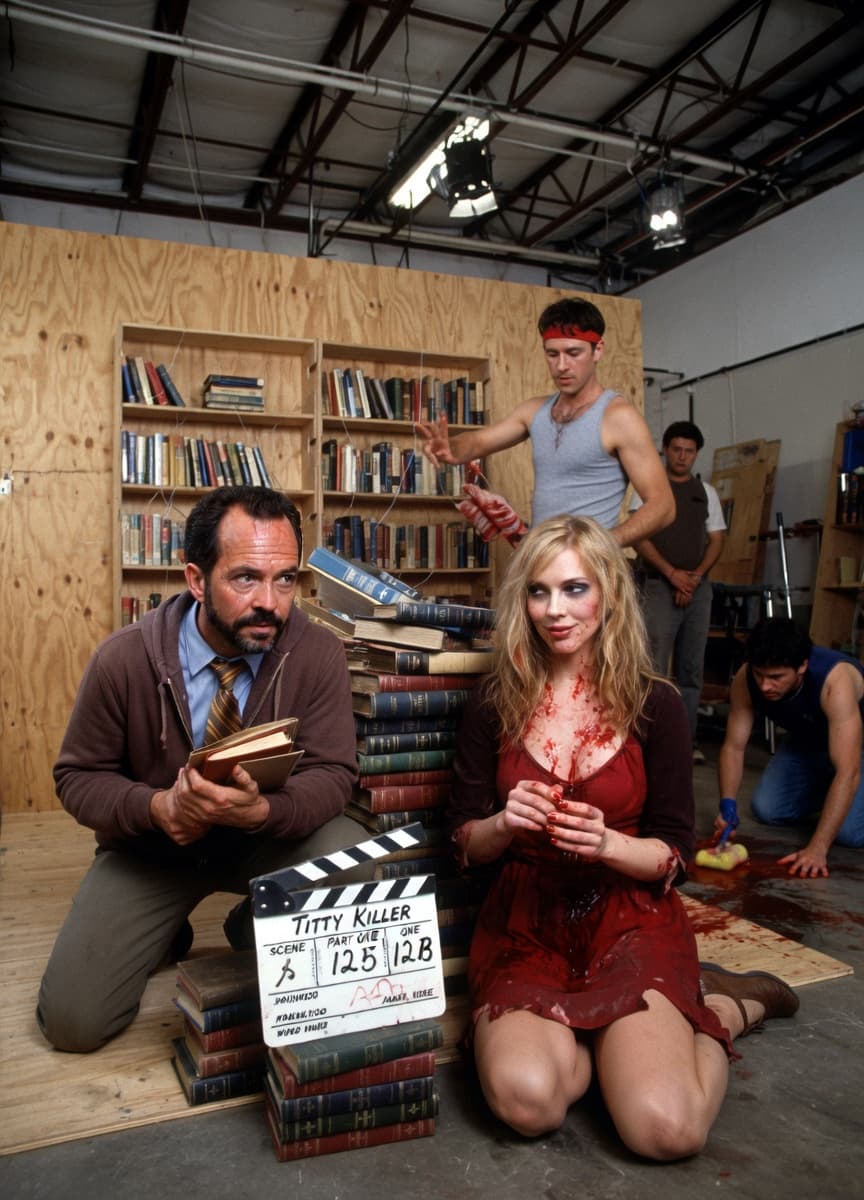
The library fight scene — the most technically complex sequence in the film, requiring Seavers and Diane Keaton (as Brenda 'The Blonde' McGee) to perform a choreographed knife-and-textbook duel across four rows of bookshelves. The bookshelves were made of painted plywood and collapsed twice during rehearsals. The books are all real — donated by a local library that later asked for them back and was told they were 'covered in too much blood.' Keaton, seen here between takes checking her nails, later described this shoot as 'the most bewildering two weeks of my career, and I was in a Woody Allen film where I had to sing.'
Production Still #4· Titty Killer: Part One (1986) · Gorehouse Productions
Production Still #4
Props master Danny Kowalski (in the Metallica shirt) proudly displays both versions of Andrew's Nuclear Option — the franchise's signature weapon. The 'hero prop' (left) features a fire extinguisher duct-taped to a gas-powered leaf blower with Christmas lights hot-glued around the nozzle. The 'stunt copy' (right) is made of foam rubber and weighs approximately two pounds. The total cost of both props was $47.50. Kowalski built them in his garage over a weekend. He is now the most prolific prop maker in franchise history, having created weapons for seven of the ten films. The blonde woman holding the hero prop is Diane Keaton's stunt double, who is also Danny's sister. Hollywood is a small town.
Production Still #5· Titty Killer: Part One (1986) · Gorehouse Productions
Production Still #5
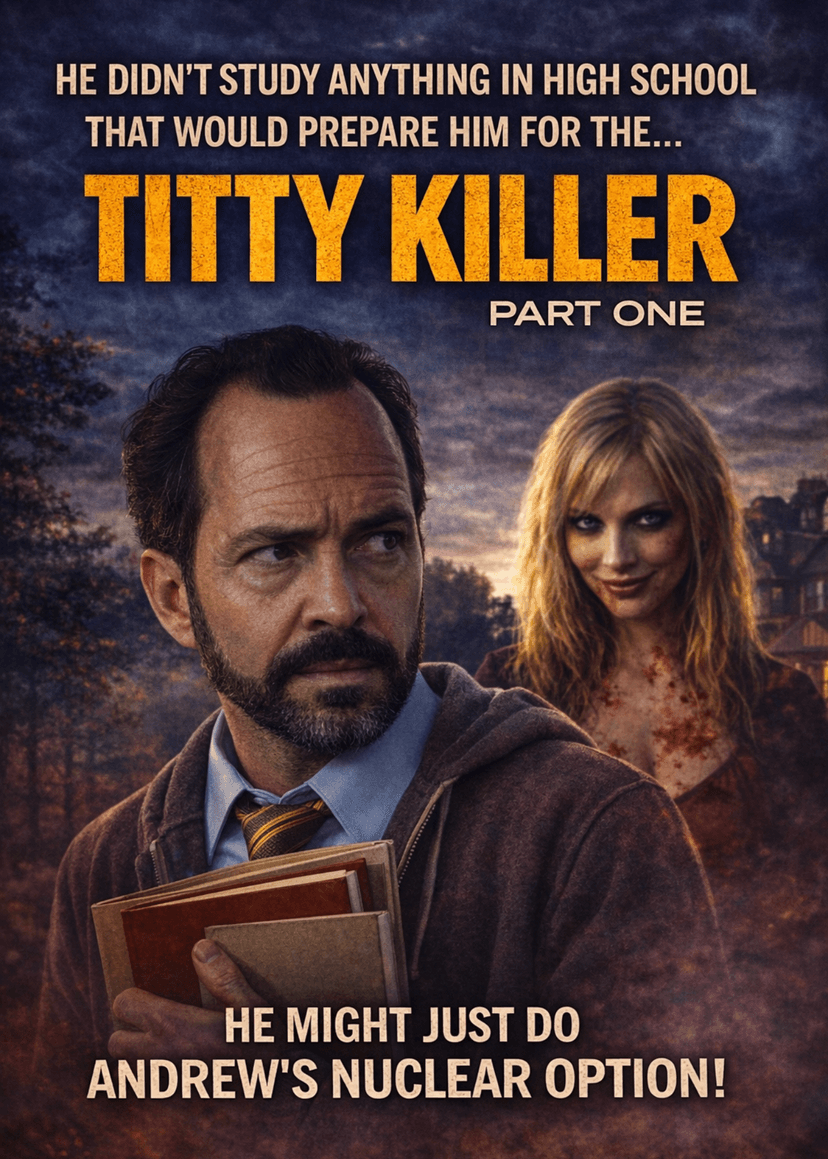
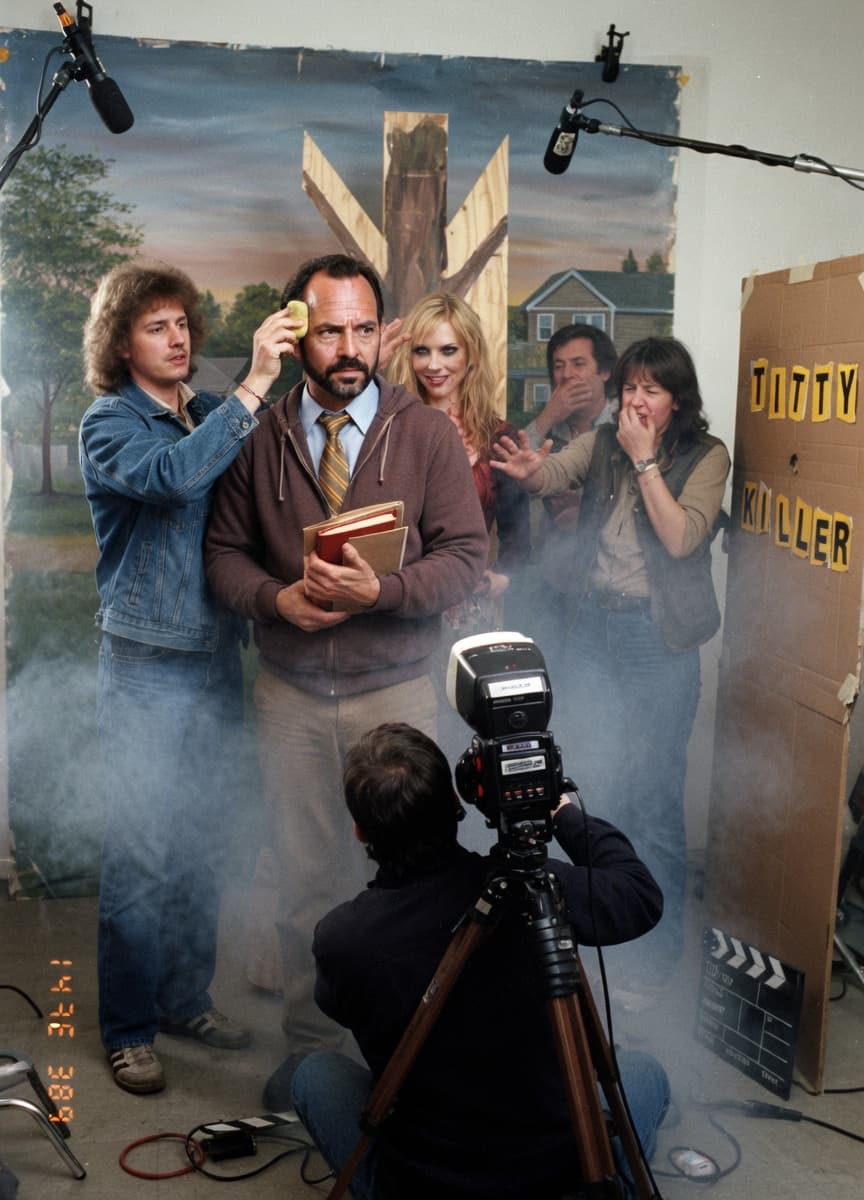
The original poster photo shoot for Titty Killer: Part One, shot in a rented warehouse in Van Nuys on a budget that wouldn't cover craft services on a modern production. Seavers holds his character's textbooks while a makeup artist dabs sweat from his forehead. Behind him, Diane Keaton smiles menacingly as directed, though she later said she was 'just trying to see the exit.' The backdrop — a hand-painted suburban neighborhood at dusk — was completed in a single afternoon by a scenic artist who was also the director's nephew. The smoke machine (operated by a PA at lower left) was set too high, causing everyone to cough violently between shots. The 'TITTY KILLER' title, visible on cardboard at right, was spelled out in press-on letters from a craft store. This image — born from chaos, fog, and $200 worth of supplies — would become the most iconic movie poster of 1986. Critics called it 'surprisingly atmospheric.' It was an accident.
The Film That Started It All
Titty Killer: Part One grossed $214.6 million worldwide on a $14 million budget — a return of over 1,400%. It spent four weeks at #1, was the 11th highest-grossing film of 1986, and was inexplicably nominated for a Saturn Award for Best Horror Film (it lost to Aliens, which everyone agreed was fair).
More importantly, it introduced the world to Brock Seavers — a 21-year-old former bouncer with no formal training, a jawline that could cut glass, and a complete inability to deliver dialogue while looking away from the camera. Hollywood had found its newest, most inexplicable star.
The franchise it spawned — now ten films and $3.36 billion later — began here, in a warehouse in Van Nuys, with $47.50 worth of props and a dream.
$214.6M
Worldwide Gross
1,433%
ROI
18
Days to Shoot